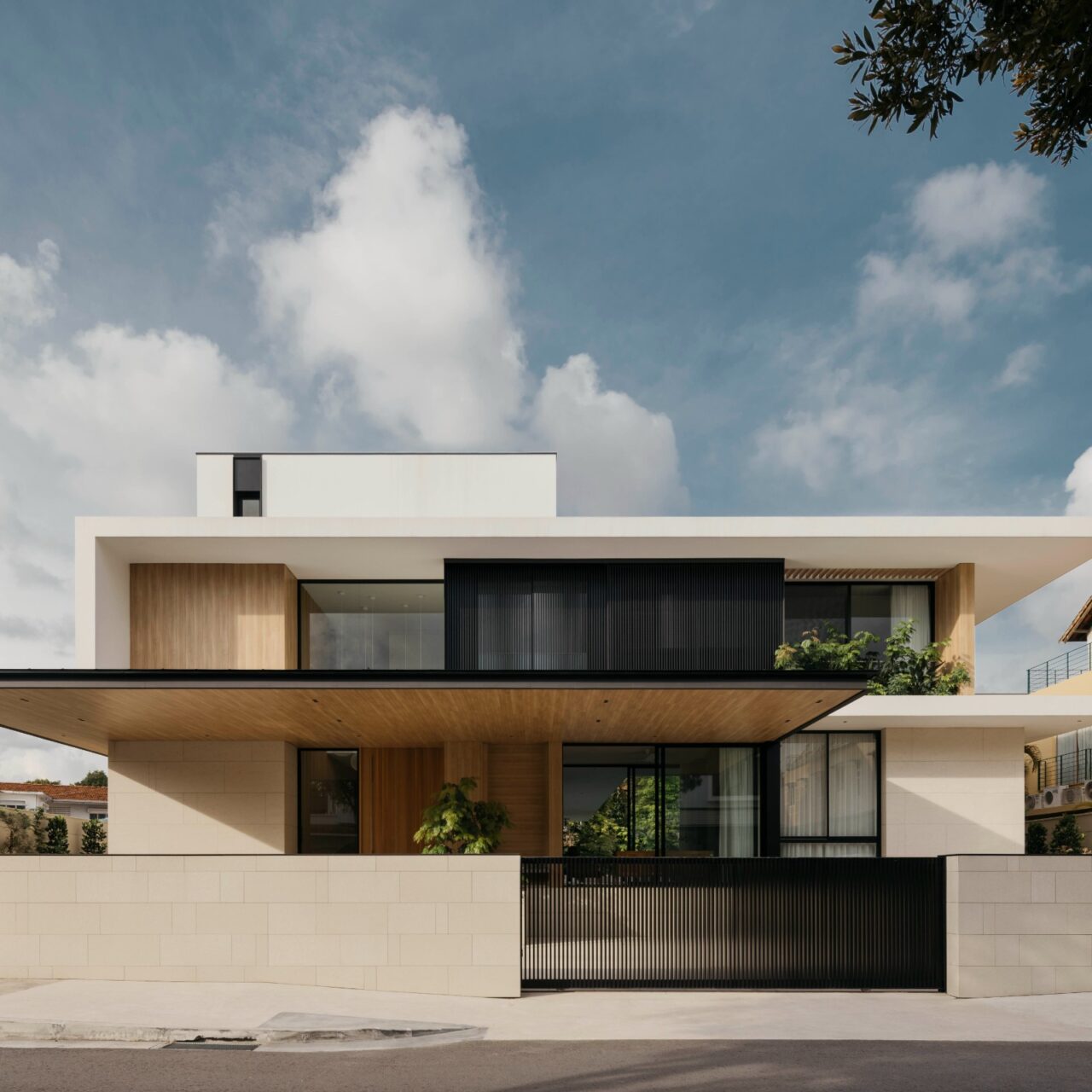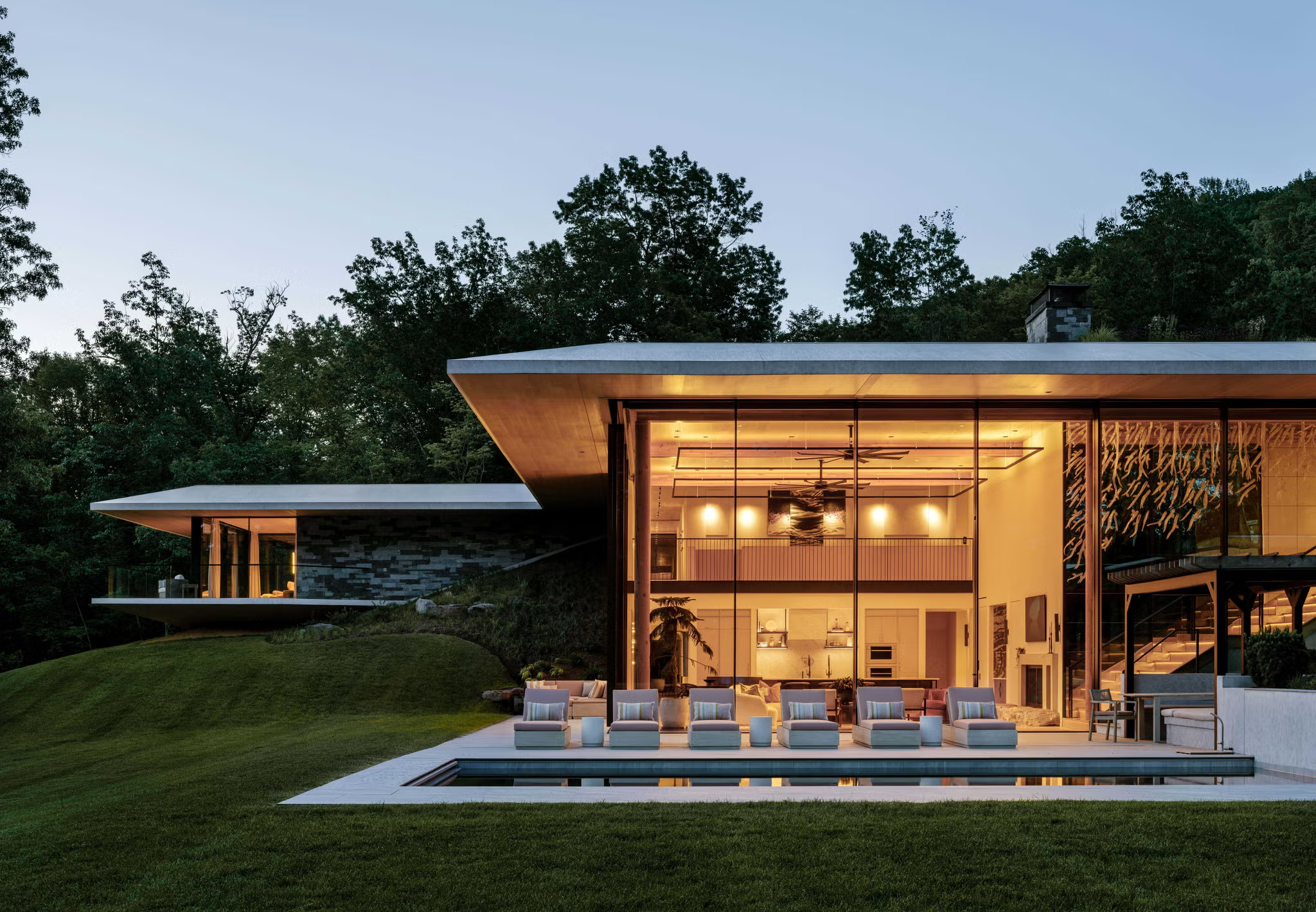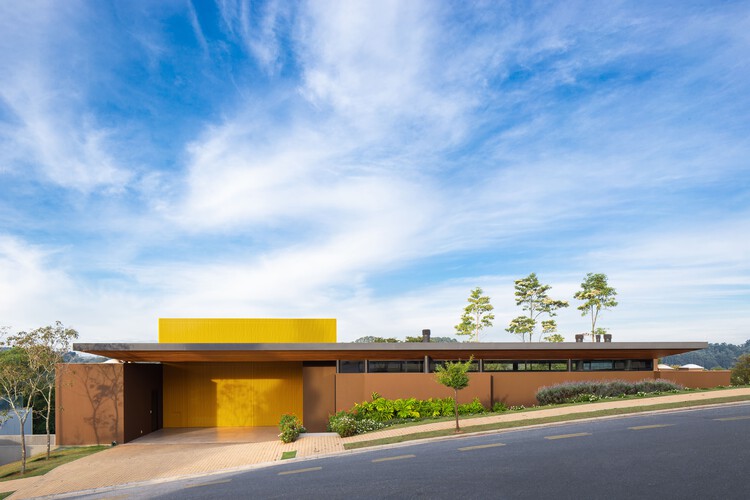


Located in a densely populated residential neighborhood in Kembangan, Jakarta, Indonesia, this 840-square-meter residence is designed as two separate volumes. One volume accommodates the family's shared living spaces, while the other is dedicated to private areas. The two structures are unified by an expansive roof canopy, creating a cohesive architectural identity and a distinctive visual character.

The ground floor comprises a garage, entrance foyer, staircase, and elevator. An en-suite bedroom is also located on this level, providing flexibility for family members or visiting guests.

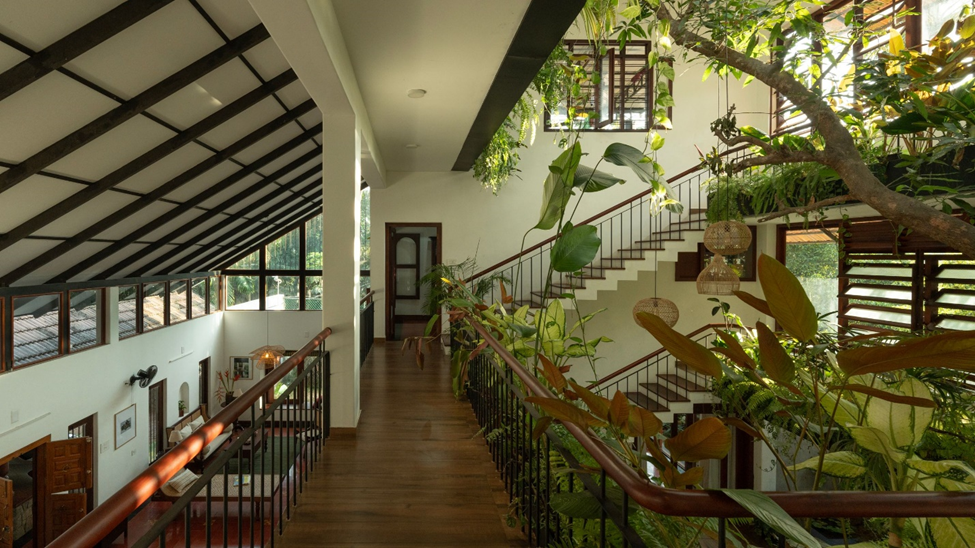
From the entrance foyer, the view extends directly toward the central swimming pool, which serves as the heart of the residence. The pool connects the living room, dining area, and kitchen within an open-plan layout while allowing natural light and ventilation to penetrate deep into the interior.

Given the limited space available for landscaping, the architects incorporated linear planting beds along the edges of the pool. This solution maximizes greenery without compromising usable space, while also creating a refreshing backdrop for the surrounding living areas.

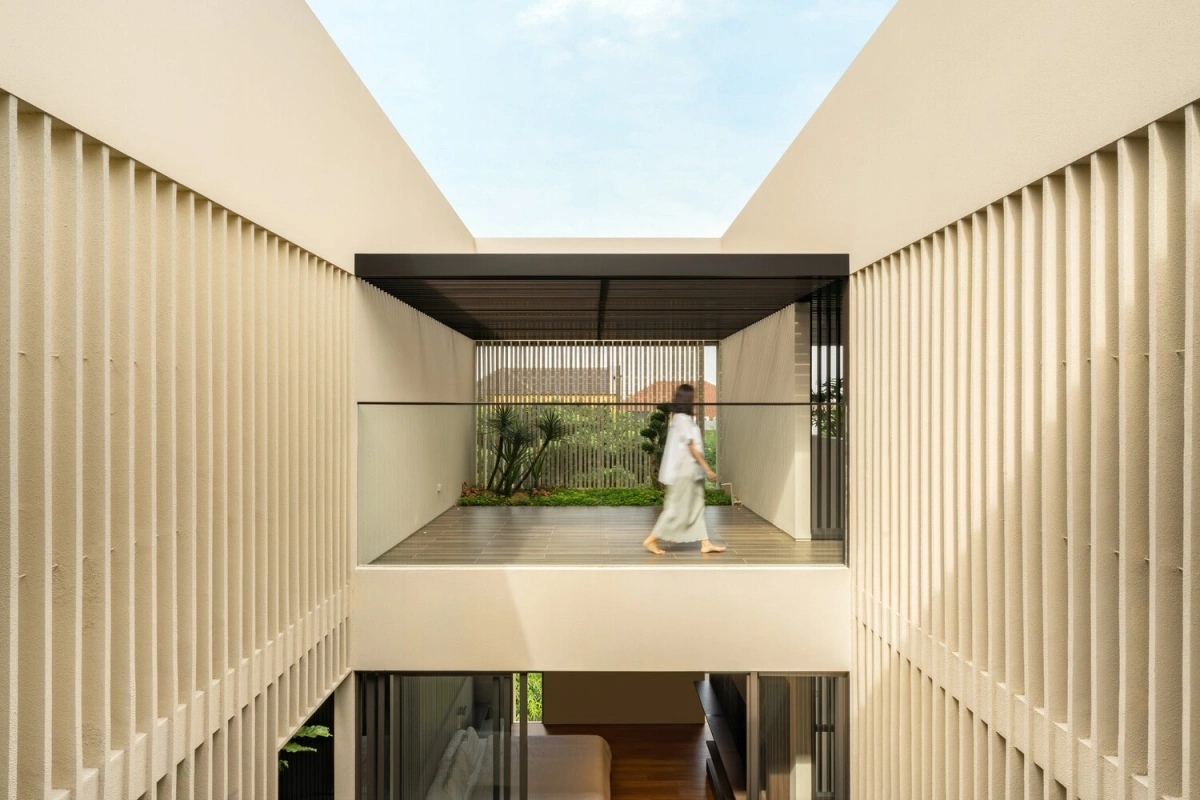
On the second floor, the architecture becomes more expressive through a façade wrapped in angular screening elements. A koi pond positioned near the entrance creates a transitional space, offering a calming arrival experience before entering the main living areas.

The third floor is dedicated to the family's primary living quarters. The master suite features a walk-in wardrobe, private bathroom, and balcony overlooking the swimming pool below. Two children's bedrooms, each with an en-suite bathroom, are connected by a shared study area designed to encourage both learning and interaction.

The fourth floor serves as a dedicated space for leisure and recreation. It includes a family lounge, fitness area, guest bedroom, and various supporting spaces. A semi-outdoor garden located beneath the slatted roof structure softens the boundary between indoor and outdoor environments, creating a comfortable retreat within the home.

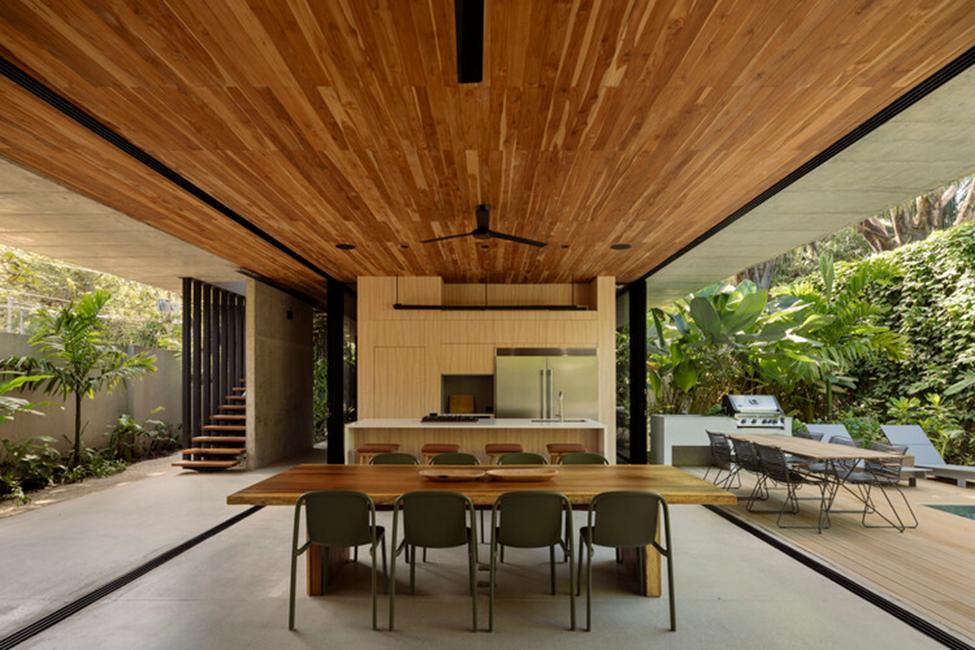
The material palette was carefully selected to suit Jakarta's tropical climate. Fiber cement panels, aluminum screens, and teak wood provide durability while minimizing long-term maintenance requirements.
In addition, passive design strategies—including cross ventilation, extensive shading devices, and layers of greenery that act as thermal buffers—help maintain a naturally cool indoor environment throughout the year.