

Metro is redefining real estate values ​​in Ho Chi Minh City

menu

close

Metro is redefining real estate values ​​in Ho Chi Minh City

Ho Chi Minh City’s metro lines are triggering a new wave of investment, with money flowing into projects along the stations, shaping real estate prices along the public transport corridor.

The operation of Ho Chi Minh City’s Metro Line 1 not only opens up a new mode of transportation but is also quietly reshaping the real estate value landscape. Areas once considered suburbs are being drawn closer to the city center than ever before, while the absolute advantages of the traditional urban core are beginning to be redistributed.

“Just a few hundred meters from the metro station can make a huge difference in price ,” said a long-time real estate agent in the eastern part of Ho Chi Minh City.


Distance is no longer measured in kilometers.

When Metro Line 1 Ben Thanh – Suoi Tien becomes operational, travel time from the eastern wards of Ho Chi Minh City will be significantly shortened. Geographical distances will therefore be reduced, leading to a reassessment of land values ​​in the market.


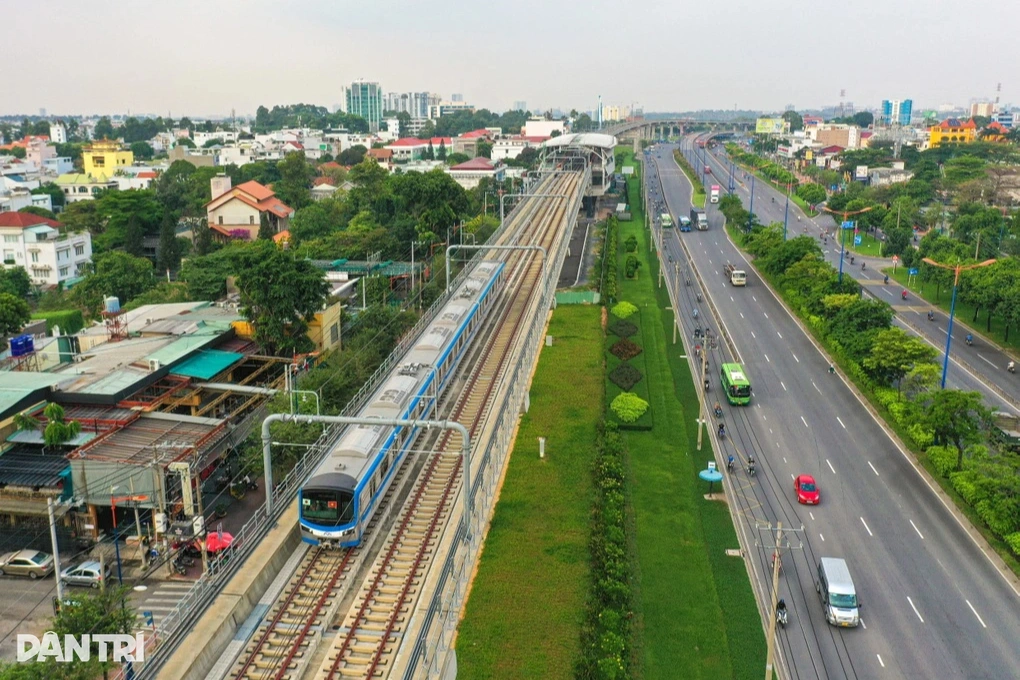
Metro is redefining real estate values ​​in Ho Chi Minh City - 1Metro Line 1 (Ben Thanh – Suoi Tien) will begin commercial operation in December 2024.


Having lived in Phuoc Long ward for over 15 years, Mr. Nguyen Van Hung said that the value of real estate around the area has changed significantly since the metro was built.

“Since the metro was built, we’ve had significantly more real estate agents inquiring about buying houses,” Mr. Hung said.

According to him, the biggest change is not just the price increase, but the level of public interest. Previously, many people were hesitant because they thought going to the city center was too far. Now that there’s the metro, they no longer think that way.

In the area near Binh Thai intersection, Ms. Tran Thi Mai, the owner of a house with a street frontage, said that in recent years the number of people inquiring about buying houses has increased significantly.

According to her, the metro has changed many people’s perspective on geographical location. This is because traveling by metro to the city center is much faster than riding a motorbike during rush hour.

While Ho Chi Minh City’s Metro Line 1 reflects the impact of already established infrastructure, in many other areas, real estate prices are rising upon hearing news of upcoming metro projects.


Metro is redefining real estate values ​​in Ho Chi Minh City - 2A project along National Highway 13 (formerly Binh Duong province) has seen improved liquidity since news broke about the metro project passing through the area.


Along the route of Ho Chi Minh City’s Metro Line 2 , market surveys show that real estate prices on some main thoroughfares such as Cach Mang Thang 8 Street, Truong Chinh Street, and the area around Tham Luong have increased significantly over the past 3-5 years.

Specifically, during the period of 2019-2020, many areas along this route recorded common prices of around 70-90 million VND/m² for townhouses and land plots with street frontage. Currently, prices have been re-established in the range of 110-150 million VND/m², with some prime locations potentially exceeding this level.

Along National Highway 13, real estate prices have also seen a sharp increase in recent years, especially with proposals to develop an urban railway line connecting the area.

In the area near Binh Phuoc overpass, land prices in 2018-2019 fluctuated around 30-40 million VND/m². Currently, the common price has increased to 70-90 million VND/m², and even higher in prime locations with large street frontage.

Furthermore, in Binh Duong New City, land and townhouse prices also increased from around 20-30 million VND/m² to 40-60 million VND/m² during the same period, partly reflecting expectations of infrastructure connectivity, including inter-regional metro lines.

Metro becomes the new pricing criterion.

The metro system is gradually becoming the main pricing driver for Ho Chi Minh City’s real estate market, both for existing lines and those still in the planning stages.

According to real estate exchanges, buyers’ search criteria have changed significantly. While previously, distance to the city center was a common measure, now distance to a metro station is becoming a priority.


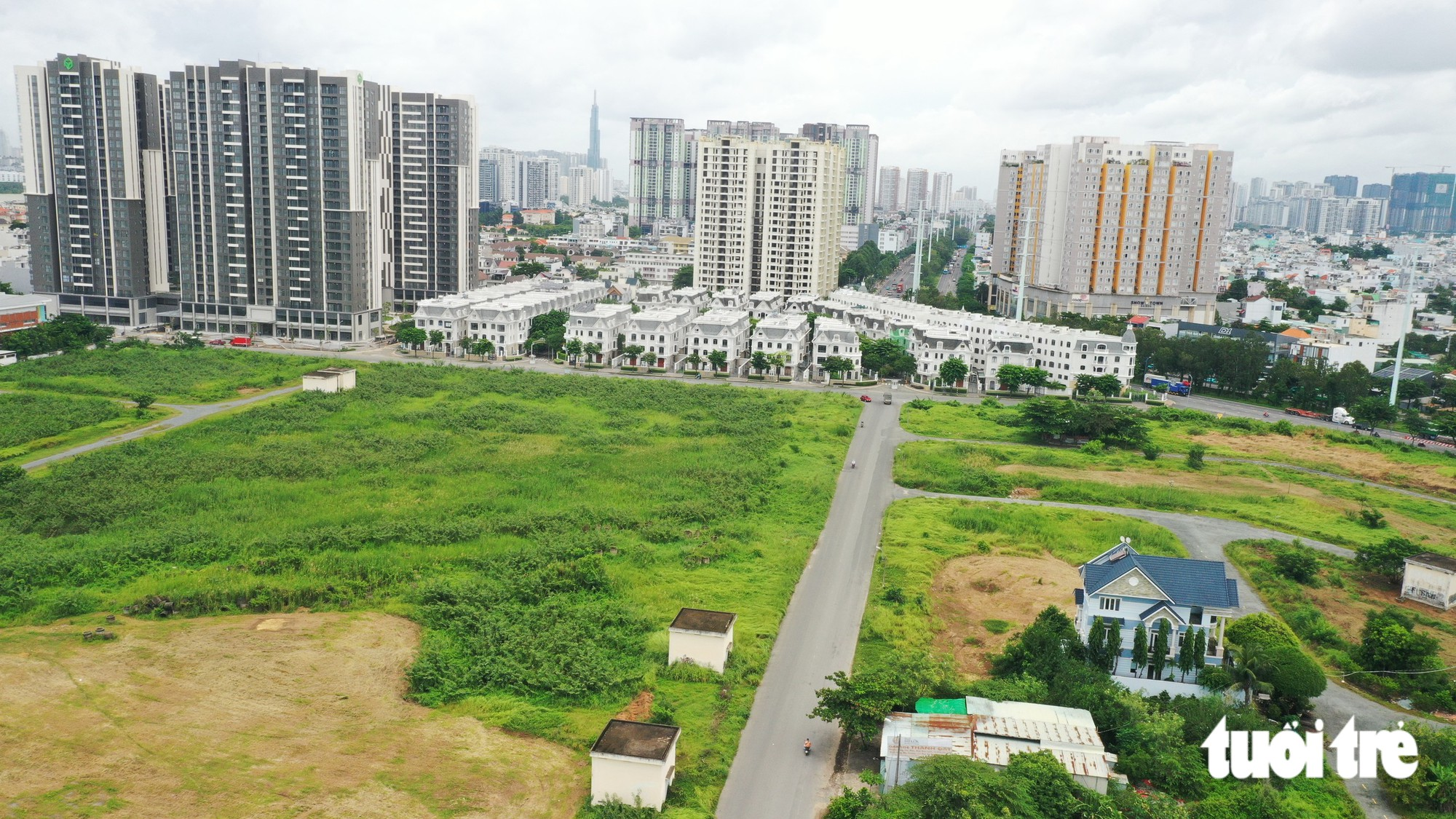
Metro is redefining real estate values ​​in Ho Chi Minh City - 3Property prices along the “future metro lines” have increased by 30%.


“A project located 500-700 meters from a metro station (in a less bustling area) always has significantly better liquidity than a project located 2-3 kilometers away (in a more bustling area), even within the same neighborhood,” said a real estate agent in the eastern part of Ho Chi Minh City.

According to experts, the real estate market in Ho Chi Minh City currently has two layers of value. The first is existing value, established in areas with clear infrastructure, such as along the Ho Chi Minh City Metro Line 1. The second is expected value, formed in areas within the metro planning zone, where prices are “predetermined” based on future connectivity.

The gap between these two price levels represents both the potential for growth and the biggest risk zone in the market.

According to Mr. Vo Kim Cuong, Vice Chairman of the Ho Chi Minh City Urban Planning and Development Association, the Transport-Oriented Development (TOD) model primarily benefits residents living around train stations, making travel more convenient and less expensive.

But more importantly, TOD also helps the metro achieve a stable passenger volume – a crucial factor in avoiding large investments that result in inefficient operation.

However, Mr. Cuong noted a crucial point: the majority of metro users are middle and low-income earners, while high-income earners still tend to use private vehicles. This creates a paradox: as land prices around the metro increase sharply as expected, the group that truly needs the metro risks being pushed further away.


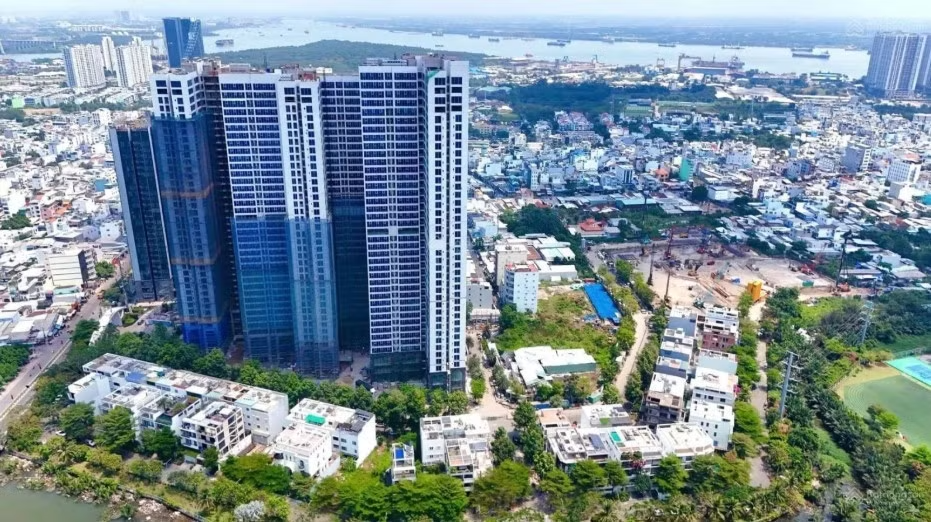
Metro is redefining real estate values ​​in Ho Chi Minh City - 4Many apartment projects are accelerating their development and offering units for sale, capitalizing on the metro announcement.


From a planning perspective, Dr. Architect Ngo Viet Nam Son believes that real estate values ​​around metro stations do not increase randomly, but rather differentiate according to a clear structure.

A typical TOD (Transit-Oriented Development) area consists of three layers: The core zone (800m – 1.2km) – where value increases most significantly, equivalent to a 10-15 minute walk. This is the area where high-rise complexes are formed, integrating housing, commerce, and services.

The extended zone (1.6 – 2km) – connected by bus, serves as a supplement to the metro system. The affected area – potentially extending to a 15-minute motorbike ride radius, where residents can “park their motorbikes and use the metro”.

This structure also explains why, in reality, real estate prices do not increase uniformly but form “value zones” around the train station, with the strongest increases in the core area.

According to Mr. Son, if planning is not properly controlled, the core TOD area could be over-exploited for commercial purposes, while lacking social infrastructure and public spaces – leading to a long-term decline in urban quality.

According to the approved plan, Ho Chi Minh City’s urban railway network will have a total length of approximately 1,012 km.

According to the plan, by 2030, Ho Chi Minh City will essentially complete 6 routes, with special priority given to the connecting axis between Tan Son Nhat Airport and Long Thanh Airport.

Thy Hue
According to VTCNews.